

Rev. Dr. Paris Donehoo is an ordained minister in the United Church of Christ, and holds degrees from Georgia Southern University, Southwestern Baptist Theological Seminary, and Columbia Theological Seminary. For forty years he served as pastor of churches in Georgia and Illinois. In addition, Donehoo taught for eleven years as adjunct professor in the Doctor of Ministry in Preaching program at Chicago Theological Seminary. Currently he fills his days with an active schedule of writing, pulpit supply, playing guitar and banjo, enjoying his eight grandchildren, and podcasting The Soul’s Garage with his partner in crime, Rev. David Ezekiel.

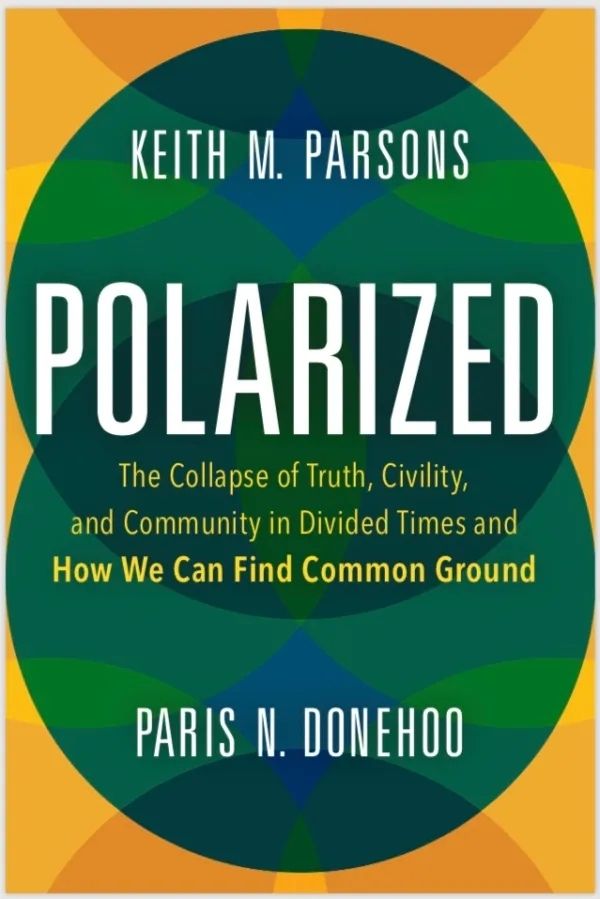
Check Out Paris's Book
An atheist philosopher and a Protestant minister interact in a constructive and respectful dialogue about their differing views on life, stressing the importance of honesty, civility, and community engagement at a time of polarized politics. Unity in diversity (e pluribus unum) — the quintessential American value– is under assault today, and along with it, our sense of shared community. In this book, an atheist philosopher and a United Church of Christ pastor demonstrate that common ground can still be found even by people with very different perspectives on life. In short, difference need not mean division.
The authors focus on the importance of truthfulness, civility, and community. In a respectful dialogue, they exchange ideas on the nature of truth, the importance of honesty, the value of civility, the definition of community in a pluralistic society, respecting differences while avoiding divisiveness, and the consequences to our nation when ideological rancor and the demonizing of opponents dominate the public square.
The authors have a personal stake as well as an intellectual interest in these issues, as they met in childhood and have maintained their friendship over the decades despite their very different life choices and career paths. They both view with alarm the widening fissures developing among Americans and conclude by pointing out a similar preference for diatribe over rational debate in the decades preceding the Civil War. At a time of shrill rhetoric, this measured, reasoned discussion between two friends shows that communication and respect are possible between people of good will.